Wednesday, May 9, 2012

Scholarly & Special


For this post I was privileged to excursion into two Special Collections in academic libraries. Kindly assisted by some Special Librarians, I was fortunate to discover and view some remarkable and rare material.

The College of Domestic Economy -Australian Institute of Domestic Economy- Emily McPherson College- RMIT

My main curiosity has been about library material belonging to the former Emily McPherson College (EMC). Two particular books document earlier history of what became known as The College of Domestic Economy, established in 1906, in Lonsdale St with 12 students. A thrilling discovery central to my topic was a photograph taken at the Athenaeum Hall (originally known as the Melbourne Mechanics Institute, established 1839) Having been in the Athenaeum archives during my 2011 student placement in the library, I understand the limitations of this facility, hence have not sought to research there for this project, due to time constraints. “The Weekly Times of 27 August, 1904, carried a half page photograph captioned ‘Opening demonstration of the Australian Institute of Domestic Economy’. The flashlight picture shows the interior of the Athenaeum Hall Collins Street, Melbourne, filled with a capacity house of fashionably dressed women, and with a front row of armchairs occupied by ladies prominent in Melbourne society.” (Docherty 1981, p.7-8)  The lower hall seated 800 people plus 150 in the balcony.  

Later known as The Australian Institute of Domestic Economy, as a result of a brief visit by Mr William McPherson, Treasurer of Victoria, provision was made in the Budget of 1923 for the erection of a new college designed to meet considerably greater numbers and then Sir William and Lady McPherson also gifted £25,000 toward the project. “Simple and inspiring in appearance, it was actually the first building in the city to be awarded the prize by the Institute of Architects for the best modern building.” (Goodchild 1930, p.15). 


The current website reference tells us that “In 1979 the college was amalgamated with RMIT, teaching finance, food science and tourism.” Mention of Home Economics (Dip.App.Sci) as it was known when I studied it there in 1982 is notable by its absence; could this be perhaps because the course no longer exists? I’ve not investigated when that course ended, as beyond personal curiosity, this is not integral information to this research project. According the website, RMIT Archives only commenced in 1995 which may be a clue as to some of the gaps I’ve discovered between now and when the last college history was published in book form in 1981; although the book also fails to mention that course particularly by that title, so there remains no evidence of it in any official history to date!

So what is to be found regarding library material belonging to the Emily McPherson College? The 1981 history by Docherty has only two references, the more specific being a ¾ page piece sub-titled The Library in the final chapter about the last decade up to 1979, sandwiched between Staff Newsletter (given a whole page space) and Administration (book chapters are organised in eras according to the Headmistresses). I was very disappointed that neither the library nor the staff mentioned, merited an entry in the index! Particularly when we consider the unique significance of the breadth of work, such as this conclusion to the piece “…the Library was also complementing the work of the Home Economics Advisory Service. Calls for inter-library loans were also being received from State and Federal government departments, from industry and from universities and colleges as far afield as Perth.” (Docherty 1981, p.259).

This entry also explains that “Mr John Ward, Chief Librarian RMIT, visited the Emily McPherson College in 1977 and gave it as his opinion that the EMC Library represented a special collection that should be kept intact.” (Docherty 1981, p.259).

Onward 35 years finds library material belonging to The Emily McPherson Collection catalogued and housed in four areas of RMIT. Some material such as the college journals with such quaint names as Palate and Petticoat and Needle and Knife, is in archival storage at the Bundoora campus, although the OPAC does not actually detail this (when I requested to view these, the applied science liaison librarian needed to contact other staff to locate it). Most of the material is catalogued with 2 call numbers: SPE indicating Special Collection and RAC for Restricted Access. The SPE are not included as a collection in the website listings. Some material (such as the 2 college histories, one signed by the author) lives in the Rare Books Room of the Swanston Library, where I was given access to view these and work. This room is located behind and managed by the Reference and Research counter, but not featured or otherwise apparent through the website, which I think is a shame as the structure adds an air of authenticism to the aesthetic of the library. Most of the EMC food and beverages collection is shelved on view in locked glass wall cases on the 6th floor above, adjacent to the Dewey classified shelves area of the general collection, where some other EMC material has been absorbed. 

There are 2 lists available (1 being some 20 pages of books and the other listing the contents of 13 Pamphlet Boxes) which were kindly emailed by the Applied Science Liaison Librarian when I initially enquired about what happened to the collection since the college closed. The books are sorted by call number so it is apparent that as would be expected, the majority of the holdings are within the 640s of the DDC. Strangely, the 1981 college history (Docherty) is not included, which seems to be an oversight, given that later material is listed. Significantly the final item listed (and of the latest date) is [Papers], McPherson, Ethel Margaret, 1990, RAC FOL 808.85 M172 and the only item in the 800s. As I wasn’t able to borrow the book in time to research more thoroughly, I’ve not been able to establish her exact association, beyond (presumed) descendant of the McPherson benefactors; but Ethel contributed the Foreword to the history, in her capacity as “Formerly President of the Council” (Docherty 1981, p. vi).

The earliest piece in the EMC collection is a French dictionary of confectionery published in 1751 and there are other 18th and also 19th century holdings. The provenance of these items fascinates me, but is probably now lost to undocumented history. It would take more detailed research trawling through the catalogues and archives, to establish what might be the oldest locally authored and/or published holdings. This example highlights the consideration around further delving, ie, to what purpose? How necessary is this information? Is further research and documentation valid for the sake of posterity and who has the authority to decide and deliver?


William Angliss Institute - Learning Resource Centre - Special Collections

A visit to the Special Collections of the William Angliss Institute (WAI) Learning Resource Centre (LRC) has so far been the highlight of this project.  The library isn’t readily apparent on the college website, as it took me a while to realise what the LRC meant! The website is apparently slated for reorganisation. Ebooks are offered in the library catalogue. The 1990 book of the college history was not available to view or borrow whilst I was there but I found the cover image from Google Images via the NLA.

William Angliss College : the first 50 years by Kathy Nunn, 1990


The Special Collections Resource Room is a new facility at the WAI, available to visit weekdays by appointment, hosted by the Special Collections Coordinator, currently a librarian with experience in special collections. The facility is accessible to external researchers as well as staff and students. The acquisition policy, apart from WAI history, has prioritised culinary material to date, selected according to importance and value. Much material has been donated, or otherwise acquired according to recommendations and requests, which usually an agent sources (in this case, Vintage Cookbooks Kallista (refer post 4)). I was pleased to be able to recommend the MacRobertsonLand biography as an important slice of Melbourne history. I was particularly interested to learn what references are used for special collections such as these. Librarian Vicky showed me An annotated bibliography of Australian domestic cookery books, 1860s to 1950 by John Hoyle which is in Rare Books at the SLV.

There are 5 distinct collections here with information about each on the website along with some digitised material and links. For instance the Menu Collection links to 2 of the most significant international online collections. A recently arrived menu collection from the Melbourne Town Hall is currently in preservation and awaiting cataloguing.

Archival storage is in another building and it is here that preservation work occurs. Other ephemera, realia and memorabilia are also stored here, especially some fascinating items from college history, including tablewear, crockery, silverwear, plaques and other trophies and photographs.


Antique menus hang on wall display around the main LRC area and other material in case displays, so I enjoyed seeing heritage material thus honoured. And the WAI LRC also contains some Emily McPherson College material!


Monash University - Sir Louis Matheson Library- Rare Books Collection

A website search reveals the Collection Overview which explains that the Rare Books Collection contains materials that are considered rare and in need of special care because of their age, uniqueness or physical beauty. Nineteen headings list the special collection areas, many relative to libraries and books about books. In 2010 I visited their Lewd and Scandalous Books exhibition, the full colour illustrated catalogue of which I now treasure. This is just one of many past exhibitions generously featured on the website. 

Unfortunately I didn’t get to the 2011 exhibition relative to this project, Cookbooks : The Sandy Michell Collection, however a Virtual Exhibition is still accessible and much information is displayed and provided with 107 digitised items! and also most conveniently, item links to the catalogue search entries and electronic availability. About 21 items – a fifth of the exhibition - are Australian pieces. It would take more work than I have time available to establish which items are relative to the Melbourne and Victorian history that interests me here, however I was delighted to find, not only another connection to the Melbourne Athenaeum, but more evidence of publisher/bookseller George Robertson (refer post 4) and Chef Wilkinson, referred to in Flavours of Melbourne as "the author of Melbourne's first cookbook..." (O'Brien 2008, p.115) which had been a burning question for this project. Appropriately the answer was in a book. However Hoyle as I later discovered, doesn't (make this claim, nor offer any State-based statistics) referring to it as "...our first Australian cookery book on Gas cooking..." (Hoyle 2010, p.10)


The Australian cook by Alfred J. Wilkinson 1876

The exhibition Introduction  by Alexandra Michell explains that “The Monash Cookbook Collection is quickly becoming an important one worldwide, many thanks to Richard Overell and his dedicated staff in the Rare Books section in the Matheson Library. It now covers a large range of books from mainly France, England and Australia, dating from 1654 to the present day.”

Particular Picnics by Alexandra Michell, 1985

Another exhibition item relates to the RMIT history, when the Working Men’s College opened in 1887, another tangent among many that I’m unable to pursue within my time constraints for this project. However I did find it listed 11th by Hoyle in the Chronological Index. Eleven of the first 20 books in this index were published in Victoria. (Hoyle 2010, p.389)


Wednesday, May 2, 2012

Books & Biographies

One particular day in 1852 on two different ships in the District of Port Phillip, there arrived three pioneers integral to our city’s literary foundation. George Robertson, Edward Cole and Samuel Mullen, established various bookstores and commercial lending libraries and trained a generation of booksellers. (Grimwade, 2009, p.xiii).

160 years onward, I feel fortunate that others have documented trails that I am able to trace and with the privilege of using twenty-first century technology, weave into a layered narrative of my own.

The most useful and current references I’ve found regarding Melbourne literary history, have been the Arts Victoria UNESCO submission and  Literary Melbourne : a celebration of writing and ideas, edited by Stephen Grimwade (also a contributor to the Arts Victoria Melbourne City of Literature submission referenced previously). This 2009 anthology, produced in association with SLV celebrates the UNESCO designation by incorporating extracts from books across a diverse range of genres, complemented by insightful introductions and full colour illustrations from the SLV Pictures Collection. The book ends with a literary walking tour of Melbourne (extending to Carlton and Collingwood) conveniently locating the historical chronology geographically with a guided description and a map.

Some early book traders in Melbourne operated as mixed businesses, for examples, publishing, retail books, sheet music and stationery and circulating library, along with related services such as bookbinding and engraving. MV displays online many of the ‘trade tokens’ issued by booksellers, and traces the history of certain traders, eg ‘Muskett's bookstore was, according to John Hope, 'regarded as "the" bookshop of Melbourne prior to the establishment of E.W. Cole's Book Arcade.'

Muskett's bookstore was, according to John Hope, 'regarded as "the" bookshop of Melbourne prior to the establishment of E.W. Cole's Book Arcade.'
There are 2 themes in the MV online references about Cole which overlap and in the first of these can be found information about the fashion for the medallions and how they were distributed and used:
■Edward William Cole, Bookseller(1832-1918) and ■Cole's Book Arcade Collection.

Material from and about Cole and his businesses is well documented, with some objects also to be found in the SLV archives. Some years ago I particularly enjoyed reading the 2007 biography E.W. Cole : Chasing the rainbow, later expanded into another book, Utopian Man). At the goldfields after the death of his business partner, entrepreneurial Cole used the last of dwindled funds to produce lemonade to sell to the thirsty and malnourished miners; later new to Melbourne, he established a pie stand (from where in downtime he could write the books he intended to publish) before transforming the Eastern markets, a precursor to his store where he opened a tea salon in the renowned book arcade business where shoppers were serenaded by a live orchestra and the aforementioned medallions were sometimes sold as admission to manage queues.  Here was one of Melbourne’s earliest book cafes!  It has been considered that Cole’s humanitarian vision of  “the federation of the world” (Lang, 2007) and other socially democratic concepts to unite peoples beyond the 19 century preoccupations with race and class, prefigured the internet, where modern technology has irrevocably altered the landscape of modern media culture.

'Micro-publishing ... is all about the freedom to publish anything you want, whenever you want, in any form you like ... At the more entrepreneurial end of the micro-publishing spectrum is Arcade Publications, which has identified a gap in the market for short, inexpensive, carefully designed books covering aspects of Melbourne's hitherto unexplored history.'
– 'From little ventures small wonders emerge,' the Age, 24 January 2009, 
Another fascinating historical biography published by Arcade, MacRobertsonland (Robertson 2010) also illuminates much interesting history of Melbourne of the 19 and 20 centuries. Like Cole, Macpherson Robertson was another innovative Melbourne business identity who among other exploits also became an author; here again with an overlap of food and retailing. Among some of the legacies of his centenary gifts to Melbourne, in the 1930s Robertson had intended to build a library as part of his proposed ‘Temple of Youth ‘precinct, but the plan was heavily criticised and abandoned. (Robertson, 2010, p.153)  Inadvertently he did build a library and more with his contribution of the school that became Mac.Robertson Girls’ High School. In April, Port Phillip Library Service hosted an author talk w. Jill Robertson (coincidentally same surname, but not a relative of her subject!) and we were treated to insights into her journey and process along with a charming slide show of images which punctuate the book. At the time of publication, I was awaiting image use permissions from the author and publishers.

Another recent biography (2011) reflecting a well-known Melbourne book business, is Rare : A life among antiquarian books, about Kay Craddock, by Stuart Kells, a speaker at the recent Clunes Booktown Festival and that website provides an author profile.

Rare: a life among antiquarian books by Stuart Kells. Image reproduced with permission from Jane Curry Publishing.
In attributing the Wordpress blog link above, authorship was not clearly apparent as there is a copyright attribution of the book title at the bottom of the page to Stuart Kells, but the link appears as an extension of the Kay Craddock website, but doesn't seem accessible within; I found it by using a Google search for the book. At the time of publication, I was awaiting permissions from the author and publishers.( I also found incidentally that the review on the link to the Readings website had the author name incorrect!)
  
A few years ago I enjoyed an ALIA excursion for library technicians hosted by Kay and her husband at their Collins Street store where we learnt that Craddock is the only Australian (and only woman) to be president of the International League of Antiquarian Booksellers. In 2007 she was awarded an Order of Australia for services to the antiquarian book trade. (Arts Victoria, 2008) The history of this premises is detailed within the website and includes references to the Presbyterian Bookroom and the Scottish Tearooms in the basement, established (originally across the road) in order to further the sale of missionary literature.

Kay Craddock Antiquarian Bookseller The Assembly Hall Building 156 Collins Street Melbourne

There are numerous histories, biographies and memoirs of significant Victorians who have contributed much to our cultural life and many of these stories reflect the values of promoting and sharing food and books among other art forms; where modern Melburnians such as Sunday Reed, Mietta O’Donell, Sheila Scotter, Mirka Mora and Stephanie Alexander are celebrated for more than the legacy of their influence.


Anne Mason, 1950s Cookery Writer, The Age & The Leader newspapers - Vintage Cookbooks online 

Hospitality histories and more abound on the shelves of two specialist retailers I visited: Books for Cooks in Fitzroy and Vintage Cookbooks in Kallista between them cover every genre relative to their niches.  I found it interesting to see how they organised and classified their material. These businesses participate in the Clunes Booktown Festival  (also addressed here in a later post) and have both expanded into online retailing, using multiple Web  2.0 channels. Ebooks is a growing stream for Books for Cooks, also known for their events (see Blog roll). I’m fortunate to have visited both stores recently, but admittedly found the variety and amount of stock somewhat overwhelming!

Wednesday, April 18, 2012

Museums & Culture

I discovered a new portal this week; but more about that later. I also learnt much more about Museum Victoria (MV), being the largest public museums organisation in Australia and the state’s first museum, established in 1854.


Among the options for exploring the online collection, is Treasures, exhibited when the museum celebrated 150 years in 2004. The history entries in this section explain how the library and museum shared premises for a century. Melbourne's Age newspaper had long promoted the view that the rightful home for the National Museum of Victoria was the Public Library building in Swanston Street.
Wax model cherries 1947
I was pleased to see that Food is among 10 Pathways offered to explore the Treasures collections.  I’d previously struck the wax fruit collection in broader searches at the VSL, each model meticulously photographed, documented and digitised, swelling the search results by hundreds.
A significant Treasure for my research proved to be this 19 century Recipe and Remedy book, with the main entry description written by Stephanie Alexander, Melbourne food identity, formerly a librarian herself.           
                                                                                Eliza Duckmanton's Recipe and Remedy book


Features such as ‘Explore this item’ allow closer inspection with zoom facility. The MV site is well organised and the digitized collection easy to navigate. However I found it disappointing not to be able to link back in to the main entry for these items from the Treasures area; but this explains why in some searches there may appear be multiple entries for the same item, in that an item may have separate listings according to the different websites within and externally to, MV and these are not necessarily cross referenced.

Exploring the History and Technology Collections yielded interesting results among the 72,783 records currently online although it took a while to establish how best to search for my topics.  The Trade Literature collection (Working Life and Trades collection) is the largest and most diverse collection of its type in any Australian public institution. 


While I was surprised to find that the only results relative to my topic were among Agricultural Machinery, I now know that I can find photographs of the SEC library and staff, even if more obtusely relevant. Woman librarian 1946
The Domestic and Community Life collection “... is most significant in relation to domestic life in early to mid-20 century Victoria.” So among the ration coupons, recipe booklets, cheese wrappers, and menus can be found some unique material published in Victoria.

Secret Recipes compiled by the Wardmaster, circa 1923


                                Digger cookery book 1939-1945


Published by the National Gallery of Victoria Women's Association 1972


Here I also happened upon many interesting collections (somewhat confusingly titled Themes in their sidebar) One such contained 316 items, including references to businesses (such as Paterson's Cakes, now also relegated to history) within my present sphere of travel and relative to my own family history. 


By experimenting with different search terms relative to food and books, eventually I found the Leisure Collection and more. Findings differ according to how items are tagged at their original source, so one must collect clues from the tags and try options, hence Café Culture yields different results to Coffee Palaces (terms taken from existing tags) with less overlap than may be initially expected. This is another anomaly to be mindful in the era of open access where multiple institutions share resources,  however it can lead to some serendipitous and unexpected finds.

Cast Iron Decoration - Federal Coffee Palace, 1888-1972 (MV)
An option within History and Technology Collections Online is Browse by location or map, eg, Melbourne, Victoria currently yields 6818 items. Another option offers to filter by object type but using the search bar in this screen still trawls (the broader) MV Collections. Searching ‘books + libraries’ produced only 1 result; but it isn’t immediately clear whether it is coincidentally a Melbourne object, but as the search results screen shows ‘no locations found’, it would seem not.  Thus experimentation confirmed that this result was indeed serendipitous as other searches showed results unrelated to Melbourne.
Each result and tangent provides more clues as to how the data is organised and therefore informs further exploration. So for instance to enter  ‘book’ into Search the collections, will yield 1080 results, with 87 Themes showing in tantalising thumbnails in a sidebar, hence I discovered a collection comprising the History of wine labels used at Great Western vineyard-1888-1918, and learnt that they are classified as objects, all 46 items.

Among the Little Lon collections, only 2 items types were listed: Archaeology or Object, and I was surprised to find that a paper and cardboard item had survived. This notebook is unique in that it has Chinese characters, English words and Italian words in it. The reconstructed ink-stone and ink mixing bowl fragrant also listed as 1880, each had differing trench numbers, so I learnt more about archaeological cataloguing, as well as another website feature highlighting when an item is on display, in this case, at Melbourne Museum.
Notebook circa 1880
I took the opportunity to make an email enquiry through the MV Discovery Centre and was pleased to have a personal response from a MV librarian within 2 days, as the automated response advises that inquiries may take up to 6 weeks. Ironically MV library records are on Trove (NLA), but an online search of the Discovery Centre catalogue is “not accessible to the public from home, but you are able to access it from one of the PCs in Discovery Centres at both the Melbourne Museum and Immigration Museum.” This could take a while!
The most exciting find for me this week however was when somehow I stumbled across a portal I previously didn’t know existed and I don’t feel that this is widely promoted or utilised to the extent that it could be. Culture Victoria links over 700 organisations with cultural collections and this site allows 3 options for views and searches: website/ organisations/ collections, as well as a blog.
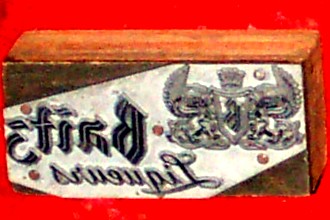
I learnt of such unique places as the Maffra Sugar Beet Museum and wondered why I never knew there was a Melbourne Museum of Printing (MMOP). Now at West Footscray, this is renowned as Australia's working and teaching museum of typography and printing, “specialising in retention of traditional printing, both the equipment and the knowledge. “


This image is from the Engravings Gallery (captioned, but not catalogued with provenance) and the site asks that users advise themselves of the permissions through the Copyright Notice page and email the museum to make requests, to which I am awaiting reply.


This is a fascinating and comprehensive collection with a range of programs and holdings relevant to various sectors; but it would seem, a sadly under-resourced organisation, in need of various kinds of assistance to maintain the collection and to present their message.
“The Museum is seeking assistance with the cost of protecting the stored collection for the next four years. Revenues should then be sufficient for ongoing storage. Without support, this world-class collection is almost certainly destined for destruction.”


Continuing through Culture Victoria to find video, led me to discover the Free Media Library at ACMI,for which I had to register, which allows saving of favourites - handy! Many of this media, such as the video I've shown, are not catalogued with provenance, which I found disappointing.


ACMI uses a “Creative Commons Attribution – Non Commercial” licence for the use of content from its Free Media Library resources, and also accepts uploaded contributions within these terms.

Unfortunately I wasn't able to download and embed the high resolution footage so viewers may prefer to link back to source (hover & click on video caption below) for better quality. Enjoy!

Friday, April 6, 2012

Statewide Searching

This week my process has led me from the library to the museum and plenty of virtual spaces in between. Expecting that an historical survey should start at the earliest point, I intended to find out about some of the oldest holdings in Victoria in relation to my topic. Therefore I determined that the main sources to start researching through would be State Library of Victoria (SLV)  and Museum Victoria (MV).

Public Library, Melbourne ca1890 (MV)

I spent an evening at the SLV intending to find an overview of what I could access from there for the overall project, get some idea of their range of their holdings and see what led where. Apart from the preliminary internet searching conducted prior to formulating the research brief, I always assumed the SLV would be my starting point. I do intend using NLA & Trove out of curiosity, but have prioritised SLV for authority and relevance with this state-based topic.  Due to the constraints of this project I’ve had to consider the boundaries of my research; for instance, the relevance and likelihood of what else can be found and established about Melbourne and Victoria by investigating elsewhere - nationally and internationally. Presumably Melbourne would hold the earliest and most valuable and relevant resources and anything else elsewhere would link back here anyway, through online networks, eg, academic, library and other institutional consortia.

A public dinner in Melbourne, or, a feast of reason and a flow of soul [picture] Melbourne : [Printed and published by Edgar Ray and Frederick Sinnett] 1856 (SLV)

I started browsing at SLV in the hope of establishing some direction that would further inform the process and overall structure of the project. Great expectations! Firstly I wanted to see what I could find on my own before consulting the reference librarians. The access on-site and from home is quite different so I’ve since found it challenging when getting vastly different results with same &/or seemingly similar searches.  Among the 38 Library Guides and the Reference Guides there was nothing specifically about food, except 2 tags: flour, sugar, each mentioned in #38 "What groceries used to cost" and only 1 reference specific to books in #8 "Finding book reviews".

Other interesting e-Resources I happened upon in the Research Guides were #23 Picture Research and #34 Victoria's early history 1803-1851 with some useful information about  Primary Sources  and the Australian Joint Copyright Project (AJCP). The picture resources link to clear information about copyright and permissions.

Picnic on the Water, Carrum, ca1890 by Gilbert J. Dunning (SLV)

On-site I also used the Australian Library Collection and found quite variable results according to how the search terms were organised (eg, different results on  same search words, using commas instead of ‘and’) Some of these results included Picture Australia holdings which then linked back to the original institution eg, Museum Victoria, so it was convenient  to navigate through different organisations. I decided to continue at the MV site directly on another occasion.  Even though I’d  intended to stay state wide, this Australian Library portal was useful as I identified a number of resources also held at City Library and others, plus Swinburne to follow up on other occasions. It seems ironic that this portal was more apparent than finding Library Link Victoria (LLV), to which I refer below.

Numerous tangental curiosities emerged in the SLV database, such as why is the electronic record of the Victorian Food Act (1984) only held at 1 library (ACU Ballarat) and why there? As tempting as it may be to find out more about this document (is this the latest act? where is it more readily accessed? Etcetera), I had to restrain myself from getting lost in sidelines.

Further browsing at SLV reminded me of a wealth of other resources to pursue such as the 2009 exhibition  The Independant Type: Books and Writing in Victoria, tracing Victoria's literary evolution from traditional Indigenous storytelling through colonial classics to the vibrant contemporary writing scene. It also toured regionally in 2010 supported by the Victorian Government through Arts Victoria’s Touring Initiative, and leaves a legacy of resources, including the Victorian Literary Map.

Prioritising my time at SLV to utilise the expertise of the reference staff, I decided to seek guidance about other ways to approach my project with the on-site resources.  The reference interview seemed to be going well but the librarian persisted in demonstrating how to use the Informit and other database resources, despite my having explained to her that I can and will access these through Swinburne, but I was at the SLV to prioritise their unique resources; then my annoyance was compounded by her continuing to search there on the UNESCO theme, even to the extent of opening these articles to show me! This was too frustrating so I decided to try my luck with another reference officer on another occasion.

The multi-subject databases led me to Informit and an interesting recent article about how Melbourne Library Service fosters community pride with The Melbourne Collection, established in 2004 to celebrate the UNESCO status with 24 titles -12 each of fiction and non-fiction (Bateman, 2012, p.12) The City library branch is significant as Victoria’s busiest public branch with the highest door count, but also for having a piano available for accomplished players to entertain patrons!


The MLS Melbourne Collection includes the excellent 


Flavours of Melbourne : a culinary biography / Charmaine O'Brien 2008.  


Image reproduced with permission fromWakefield Press, Adelaide.


However I was also surprised to discover another book recently published by the same name ~ Flavours of Melbourne : favourite restaurants and bars in Melbourne's laneways and rooftops/ written, edited, designed and published by Smudge Publishing; introduction Rita Erlich; photography Brad Hill, 2011.

Something I discovered about how resources link and overlap, or don’t, is that MLS does not appear in Library Link Victoria. Curiouser and curiouser?

Now if I can just get a handle on how to get consistency of formatting in Blogger...

Sunday, April 1, 2012

Research Brief

·    clearly identify your research topic
·    outline the scope of the topic by identifying the main subject areas to be covered
·    describe your intended search strategies


In the early 21st century, Melbourne boasts distinction as a major international city recently awarded two culturally significant status’, having in the last decade become both a UNESCO City of Literature and Slow Food Convivium. Thus my theme is unified among permutations of our 3 most basic nourishments: place, sustenance and knowledge.


UNESCO Melbourne Logo Device & Guidelines via Arts Victoria 2008.
During the research process I expect to develop further queries adjunct to those I’ve already identified regarding this subject, and realise that some will remain unable to be thoroughly satisfied within the limitations of this project. I envisage the progression of the project illuminating the larger story, ie, how to approach, research and structure themes in the history of books and libraries?

Whilst Food as a theme, of itself and in relative information across history, is an interminable subject, represented in many formats and genres of publishing and straddling many categories of cataloguing for example, there are other niche contexts, (recipe copyrights, archiving, realia, rare books)  to explore relative to the history of books and libraries.  Although any of these tangents could warrant an entire blog topic, even the broader evolution of publishing about food across eras is fascinating from the vantage point of the information age and in light of future trends, but just too big a mouthful to bite off here.

Although my preference so far with the theme seems slanted more toward the cultural, rather than traditional scientific areas such as agriculture and nutrition, a food topic cannot exclude consideration of the broader realm of sciences, particularly as the modern trend in food journalism demonstrates a more holistic discourse with consideration to issues such as philosophy, politics and ethics in commerce and consumption. So I expect the weekly posts, including the summary report, to be informed by, and to reflect  such currency and context.

Therefore I intend to encompass as extensive an historical survey as possible, whilst confined to statewide content and national resources. With thoroughness a priority, I plan to utilise a broad range of academic, public, online and diverse printed monograph, journal etc and other types of research resources. I will endeavour to arrange visits to premises pertaining to my theme, eg, academic and/or special libraries. This project will scan a range of government institutions in an attempt to access statistical and other data and analyse holdings. Also considered are a variety of commercial organisations, including boutique publishers, specialist retailers and other unique businesses, such as the library and literary cafes.

As an opportunity to expand my technological skills through construction and development in the Blogger format, I will review widgets and other Web2.0 tools to accommodate a spectrum of graphical representation and other media formats such as video, photographs and illustrations to add dimension and aesthetics to the presentation, thereby addressing engagement and learning styles and exploiting the inherent versatility that the weblog format offers. Curatorial sites offer convenience and currency so I will continue to survey these for content and style inspiration.
Thus I anticipate using physical and online resources in the practice of honing more specialist research skills, by exploring the range of tools beyond general databases and directories, namely other subject and topic based portals, custom and meta-search engines.  I relish learning more about the research process experientially.

References
Arts Victoria 2008, UNESCO City of Literature MelbourneArts Victoria. South Melbourne.